
If you’re into wellness trends or scrolling health food TikToks, you’ve likely come across blue chia pudding—a dreamy, vibrant dish that’s as beautiful as it is nourishing. But this isn’t just about aesthetics. Made with chia seeds, blue spirulina, and a mix of creamy plant-based milks, this pudding is packed with omega-3s, protein, and antioxidants. Whether you’re craving breakfast, a midday snack, or a light dessert, this dish fits the bill.
In this article, we’ll break down everything you need to know—from what makes it blue, to its health benefits, and how to make it at home. You’ll also find smart tips, expert FAQs, and easy variations.

Table of Contents
What is Blue Chia Pudding?
Introduction to Chia Pudding and Its Rise in Popularity
Chia pudding has exploded in popularity over the past few years—and for good reason. Chia seeds, when mixed with liquid, form a thick, gel-like texture that’s not only satisfying but also packed with nutrients. Originally favored by athletes and clean-eating advocates, chia pudding has become a go-to for anyone looking for a fast, healthy, and customizable snack or breakfast.
But blue chia pudding takes it a step further—introducing a visually stunning twist through the use of blue spirulina powder. It’s now a favorite among plant-based eaters, wellness influencers, and busy folks who want to prep nutrient-rich meals in minutes.
Chia pudding isn’t just simple to make—it’s incredibly versatile too. You can add flavors, toppings, colors, and textures to match your preferences. And yes, it tastes better than it looks—especially when you know how to balance it with the right ingredients.
What Makes It Blue? Understanding the Role of Blue Spirulina
So, what gives blue chia pudding that signature aqua hue?
The answer: Blue spirulina powder—a natural, plant-based colorant derived from Arthrospira platensis, a blue-green algae. Unlike standard green spirulina, blue spirulina is refined to remove the strong seaweed flavor, leaving a subtler taste and a striking blue color.
Blue spirulina is rich in:
- Phycocyanin (an antioxidant)
- B vitamins
- Iron
- Detox-supporting compounds
It’s more than just eye candy. Add it to your chia pudding, and you’ve got a visually stunning superfood packed with immune-supporting nutrients.
Love naturally vibrant foods? Our blue matcha smoothies are another eye-catching addition to your superfood lineup.
Health Benefits of Blue Chia Pudding
Nutritional Power of Chia Seeds
So, what sets blue chia pudding apart from just being a beautiful breakfast? The magic starts with chia seeds, which are jam-packed with essential nutrients. These tiny seeds swell in liquid to create a pudding-like texture, but they also deliver serious nutritional value.
Here’s what two tablespoons of chia seeds provide:
| Nutrient | Amount (per 2 tbsp) |
|---|---|
| Fiber | 11g |
| Protein | 4g |
| Omega-3 Fatty Acids | 5g |
| Calcium | 18% RDI |
| Magnesium | 23% RDI |
This impressive nutrient profile makes chia pudding—especially blue chia pudding made with superfoods like spirulina—a smart choice for breakfast or post-workout recovery. Fiber supports digestion and fullness, omega-3s protect your heart and brain, and the combination of plant protein and minerals supports energy and bone health.
When you start your day with a bowl of blue chia pudding, you’re giving your body fuel that lasts without the sugar crash. It’s a simple, prep-ahead meal that delivers both function and flavor.
Why Blue Spirulina is Considered a Superfood
So, what elevates regular chia pudding into the visually striking and nutritionally loaded version we call blue chia pudding? The answer: blue spirulina.
Unlike green spirulina, which has a strong, earthy flavor, blue spirulina is mild—yet incredibly rich in antioxidants, thanks to its star compound, phycocyanin.
Health benefits of blue spirulina include:
- Immune support – Rich in vitamins and iron
- Anti-inflammatory effects – Great for recovery and joint health
- Antioxidant protection – Fights oxidative stress
- Detox support – Natural cleansing properties
Adding just a teaspoon to your chia mix transforms a basic snack into a superfood powerhouse. And because blue spirulina doesn’t carry a fishy taste, your blue chia pudding keeps its creamy, coconut-vanilla flavor profile while looking bold and beautiful.
Don’t miss our blue matcha smoothies they’re another fun way to enjoy blue superfoods in your routine.
Print
Blue Chia Pudding – A Vibrant and Nutritious Superfood Delight
- Total Time: 10 minutes
- Yield: 2 servings 1x
Description
This Blue Chia Pudding is a fun, creative option for a snack, breakfast, or dessert—loaded with nutritional goodness!
Ingredients
- ¼ cup chia seeds I recommend white chia seeds
- ½ cup full-fat coconut milk
- ¾ cup unsweetened plant milk such as soy or almond
- 1 teaspoon blue spirulina powder
- 1 teaspoon vanilla
- 1 tablespoon pure maple syrup
Instructions
- Add all the ingredients to a bowl with a lid or a large jar and mix well. Stir well with a spoon until the mixture is smooth and no dry seeds or blue powder remain.
- Let the mixture sit for 5–10 minutes, then stir again to break up any clumps that may have formed.
-
Seal the container and refrigerate for at least an hour to let it thicken.
- Stir once more before serving. Serve on its own or layered with plant-based or regular yogurt.
Notes
- Chill overnight for a thicker, creamier consistency and easy grab-and-go breakfast.
-
Adjust sweetness by adding more or less pure maple syrup depending on your taste.
-
Top with plant-based yogurt, berries, or granola for extra flavor and texture.
-
This pudding keeps well in the fridge for up to 4 days, making it ideal for meal prep.
- Make it nut-free by using oat milk or soy milk instead of almond milk.
- Prep Time: 10 minutes
- Cuisine: American
Nutrition
- Calories: 265kcal
Ingredients Breakdown and Their Roles
The Function of Coconut Milk and Plant-Based Milks
Every creamy spoonful of blue chia pudding starts with a good base—and the combination of full-fat coconut milk and unsweetened plant-based milk is key.
Coconut milk brings:
- A rich, velvety texture
- Healthy saturated fats for energy
- A subtle natural sweetness that enhances flavor
Using plant-based milks like almond, soy, or oat keeps the texture light and the flavor well-balanced. They thin out the thickness of coconut milk, making it easier for the chia seeds to absorb moisture and expand properly.
The ratio of thick to thin milk is what determines your final texture. In the recipe for blue chia pudding, using ½ cup full-fat coconut milk with ¾ cup unsweetened almond or soy milk creates a pudding that’s rich, yet not too heavy.
Pro Tip: Always opt for unsweetened versions to control sugar content and let your add-ins (like maple syrup or fruit) shine.
Looking for inspiration? Try these cloud bread chips as a crispy, light snack to pair with creamy puddings.
The Importance of Vanilla and Maple Syrup in Flavor Balance
Without a few flavor enhancers, chia pudding can taste a little flat or earthy. That’s where vanilla extract and pure maple syrup come in.
- Vanilla extract adds warmth and complexity. Even a teaspoon transforms the flavor from bland to bakery-level goodness.
- Maple syrup offers sweetness without being overpowering. One tablespoon is all it takes to cut through the neutral taste of chia seeds and the subtle algae notes in spirulina.
When used together, they balance the natural nuttiness of the seeds, the creaminess of the coconut milk, and the clean taste of blue spirulina.
The result? A pudding that tastes as good as it looks.
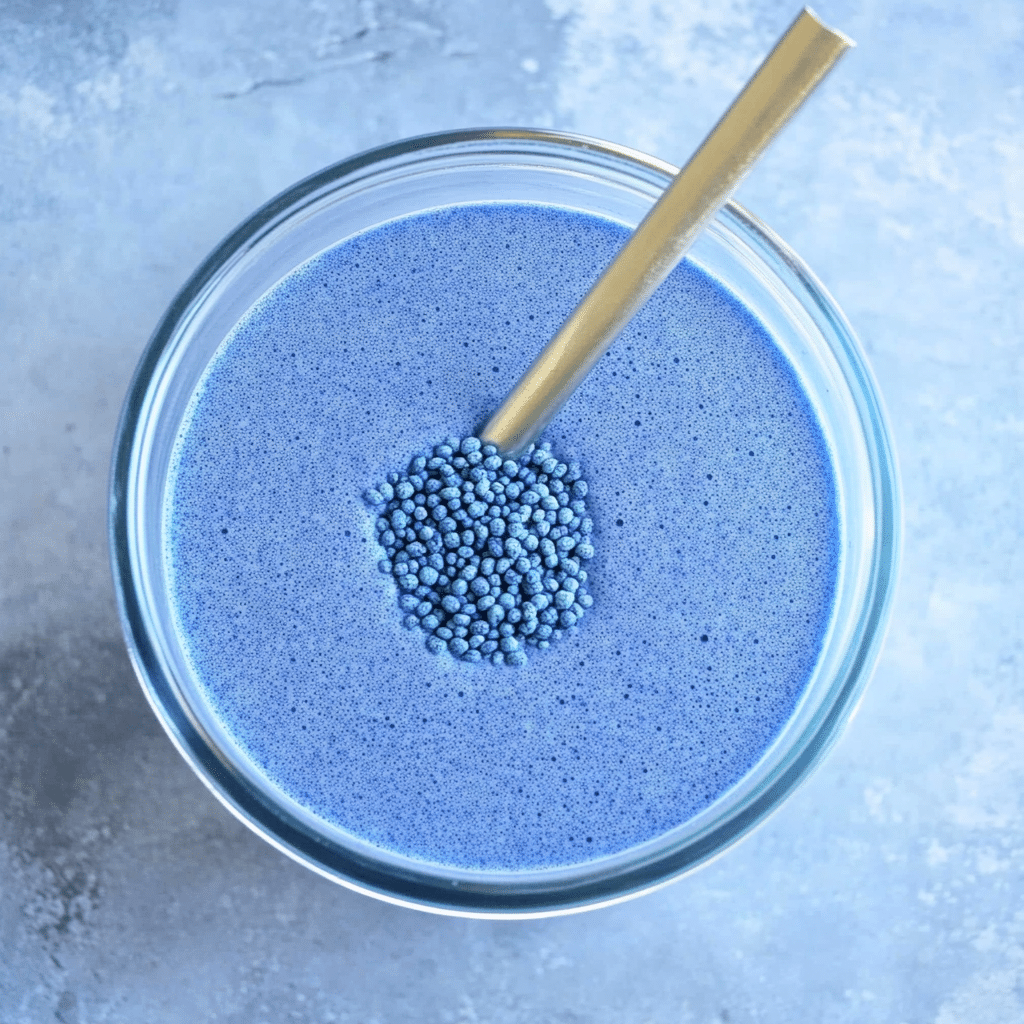
Why White Chia Seeds Work Best for Blue Chia Pudding
While black chia seeds work fine, white chia seeds are ideal for blue chia pudding—wondering why? The lighter color lets that vibrant blue shine through.
- They don’t dull the vibrant blue color
- They offer the same nutritional benefits
- Their neutral hue helps the spirulina color pop
So if your goal is that bright ocean-blue bowl, go with white seeds for maximum visual impact.
How to Make Blue Chia Pudding (Step-by-Step Guide)
Preparing Your Ingredients and Choosing the Right Chia
Before you begin, gather all your ingredients for blue chia pudding to make prep seamless. Here’s what you’ll need:
| Ingredient | Amount |
|---|---|
| White chia seeds | ¼ cup |
| Full-fat coconut milk | ½ cup |
| Unsweetened plant milk | ¾ cup (almond or soy) |
| Blue spirulina powder | 1 teaspoon |
| Vanilla extract | 1 teaspoon |
| Pure maple syrup | 1 tablespoon |
We recommend white chia seeds because they blend better with the blue spirulina for a brighter, cleaner color. While black chia seeds work fine, they may muddy the final look.
Make sure to use a high-quality blue spirulina—not just for vibrant color but also for nutritional impact. It should be finely powdered and taste neutral, with no strong aftertaste.
Mixing, Setting, and Layering Tips for Perfect Texture
The success of blue chia pudding depends on the texture. You want it thick, creamy, and smooth—not clumpy or watery. Follow these steps:
- Combine all ingredients in a large jar or mixing bowl with a lid.
Stir vigorously with a spoon or whisk until everything is evenly combined. Check that no dry chia seeds or spirulina clumps remain. - Let the mixture sit for 5–10 minutes.
This allows the chia seeds to begin absorbing the liquid. - Stir again.
This is key! Stirring a second time breaks up any clumps that may have started to form and ensures a smooth, even pudding. - Seal the jar or bowl and refrigerate for at least 1 hour.
For best results, refrigerate overnight. This gives the chia seeds enough time to swell fully and create that signature gel-like texture. - Serve and customize.
Enjoy it layered with yogurt (plant-based or dairy), topped with fresh fruit, granola, or a spoonful of nut butter.
Want more prep-ahead breakfasts? Check out tahini breakfast cookies—they pair perfectly with a chilled jar of blue chia pudding.
Flavor Profile – What Does Blue Chia Pudding Taste Like?
How Blue Spirulina Impacts Taste and Texture
When people see blue chia pudding, their first question often is: “Does it taste like seaweed?” Luckily, the answer is no.
Blue spirulina has a much milder flavor than its green counterpart. It doesn’t have the earthy or fishy notes you often get with traditional spirulina powders. In fact, most people describe its flavor as almost neutral—making it an ideal superfood to mix into recipes without overwhelming other ingredients.
That said, the overall flavor of blue chia pudding is:
- Lightly sweet from maple syrup
- Creamy and rich thanks to coconut milk
- Subtly floral and warm from vanilla extract
- Smooth and mild with a slight nuttiness from chia seeds
The result is a pudding that’s easy to love—especially if you prefer mellow, not-too-sweet breakfasts or snacks. It’s not sugary or artificial. It’s wholesome, soft, and subtly indulgent.

Enhancing Flavors with Yogurt, Fruits, and Toppings
Want to take your blue chia pudding from good to great? Add a few toppings or layers to bring in more flavor, texture, and visual contrast.
Here are some top additions:
| Topping/Layer | Flavor Impact |
|---|---|
| Plant-based yogurt | Adds tanginess and creaminess |
| Fresh berries | Bright, juicy contrast |
| Sliced bananas | Natural sweetness and softness |
| Toasted coconut flakes | A nutty crunch |
| Nut butter | Richness and depth |
| Granola | Adds crunch and complexity |
Layering pudding with yogurt or fruit creates a parfait-like experience that feels decadent but is still healthy. You can also add a pinch of cinnamon or cardamom for a warm twist or a few cacao nibs for crunch.
Common Mistakes and How to Fix Them
Why Is My Chia Pudding Too Watery or Too Thick?
Getting the perfect texture for blue chia pudding is all about the ratio and method. If you’ve ever ended up with something too runny or overly dense, you’re not alone. Here’s how to troubleshoot:
Too Watery?
- Problem: Not enough chia seeds, too much liquid, or not enough chilling time.
- Fix: Add an extra tablespoon of chia seeds, stir well, and let it rest in the fridge for another 30–60 minutes.
Too Thick?
- Problem: Too many chia seeds or thick coconut milk.
- Need to adjust the texture? Simply stir in 1–2 tablespoons of plant-based milk at a time until it reaches your preferred consistency.
Clumpy Texture?
- Problem: Not stirring twice (right after mixing and again after 10 minutes).
- Fix: Stir the mixture twice within the first 15 minutes to prevent seeds from clumping at the bottom.
Tip: Use a clear jar or bowl so you can visually check for seed clumps during the setting process.
Troubleshooting “Why is My Chia Pudding Blue?”
This may seem like an odd question, but it’s actually a frequently searched topic. People often wonder:
Why is my chia pudding blue if I didn’t use blue spirulina?
- Answer: Some plant-based ingredients (like butterfly pea flower or certain fruit blends) may cause natural color shifts when mixed with lemon juice or dairy alternatives. If you’re using a pre-flavored mix or plant-based milk blend, that could be the culprit.
Why is it not blue enough when I added spirulina?
- Fix: Use 1 full teaspoon of quality blue spirulina powder. Anything less may give a pale hue. Make sure it’s thoroughly mixed so there are no streaks or powder clumps.
Want to experiment with colorful superfoods? Try our blue matcha smoothies they’re bold, healthy, and just as stunning.
Bonus Tip: If your spirulina smells strong, it might be low quality or expired. Always store your spirulina in a cool, dry place, and buy from a reputable brand to preserve both taste and nutrients.
Is Blue Chia Pudding Actually Good for You?
Digestive, Energy, and Skin Benefits
Short answer? Yes—blue chia pudding is genuinely good for you. It’s not just an Instagram-friendly breakfast; it delivers legitimate health benefits that are backed by science.
Here’s why it earns its spot as a functional superfood:
- High in fiber: Just two tablespoons of chia seeds pack 11g of fiber. That’s nearly half your daily recommended intake. Fiber aids digestion, supports a healthy gut, and helps you stay fuller for longer.
- Sustained energy: Thanks to the combo of healthy fats, fiber, and plant protein, blue chia pudding provides slow-digesting energy—no mid-morning crashes.
- Loaded with Omega-3s: These essential fatty acids are vital for brain health and cardiovascular function.
- Glowing skin support: Blue spirulina’s antioxidants, especially phycocyanin, help fight oxidative stress, which is a key factor in skin aging and dullness.
- Dairy-free and allergen-friendly: Most versions of blue chia pudding are free from dairy, gluten, soy (depending on the milk used), and refined sugars—making them great for people with dietary sensitivities.
It’s also low-glycemic, meaning it won’t spike your blood sugar like traditional sweet breakfasts.
Serving Ideas and Variations
Parfaits, Smoothie Bowls, and Dessert Versions
The best part about blue chia pudding? It’s endlessly customizable. Whether you’re eating it for breakfast, a snack, or a clean dessert, there are countless ways to serve it.
Here are some crowd-pleasing ideas:
- Blue Chia Yogurt Parfait
Layer your pudding with plant-based vanilla yogurt, fresh berries, and a sprinkle of granola for a dairy-free parfait that rivals anything in a café case. - Blue Spirulina Smoothie Bowl Base
Blend your pudding with banana and a splash of oat milk to create a creamy smoothie bowl. Top it with shredded coconut, hemp seeds, and kiwi slices for a tropical vibe. - Layered Dessert Cups
Alternate spoonfuls of blue chia pudding with mashed mango or raspberry compote for a layered dessert that’s sugar-free and stunning. - Frozen Chia Pops
Pour the pudding into popsicle molds and freeze. These make excellent summer treats for kids and adults alike. - Mini Chia Tartlets
Fill mini tart shells with blue chia pudding and top with whipped coconut cream and fruit for an elegant plant-based dessert.
Kid-Friendly and Meal-Prep Friendly Options
If you’re packing lunches or prepping breakfast for the week, blue chia pudding is a dream:
- Mason Jar Meals: Make individual jars to grab and go in the morning. Add toppings fresh just before eating.
- Bento Box Side Dish: Pair a small jar of pudding with veggie sticks and nuts for a balanced snack or lunch add-on.
- Lunchbox Boost for Kids: Mix in mashed banana and top with blueberries for a sweet version kids will love—plus, the bright color is always a win.
To keep things interesting throughout the week, try changing the toppings or milk base:
- Monday: Coconut milk + kiwi
- Tuesday: Oat milk + banana + almond butter
- Wednesday: Soy milk + raspberry + granola
- Thursday: Almond milk + mango chunks
- Friday: Coconut milk + cacao nibs + peanut butter drizzle
Conclusion:
With its striking color, gentle flavor, and powerhouse nutrients, blue chia pudding is more than just a pretty dish—it’s a superfood you’ll look forward to. Whether you make it as a breakfast jar, smoothie bowl, or freezer pop, it’s endlessly adaptable and perfect for anyone following a plant-based, gluten-free, or clean eating lifestyle.
From gut health to sustained energy and skin glow, this is a pudding that works as hard as it looks good. Plus, it’s easy to prep, easy to customize, and easy to love.
Follow Ole Recipes on Facebook for easy, beautiful, and nutritious meals made with real ingredients from dreamy breakfasts like blue chia pudding to vibrant, gut-friendly snacks
FAQs
Why is my chia pudding blue?
The vibrant blue hue in chia pudding comes from blue spirulina powder—a natural pigment derived from blue-green algae. When added to the chia mixture, just a teaspoon of blue spirulina transforms the pudding into a vibrant sky-blue treat.
If you didn’t intentionally add blue spirulina but your pudding still turned blue, it might be from a blended plant-based milk or a fruit additive like butterfly pea flower extract, which can shift in color depending on pH levels.
Is chia seed pudding actually good for you?
Chia seed pudding isn’t just trendy—it’s genuinely good for you. It’s a nutrient-dense food rich in fiber, omega-3s, protein, and antioxidants. It supports digestion, helps with weight management, and provides long-lasting energy. When enhanced with blue spirulina, it also becomes a source of phycocyanin, a powerful antioxidant known for immune support and detoxification.
Are there any potential downsides to eating chia pudding?
Chia pudding is generally safe, but overconsumption can cause issues for some:
Digestive Discomfort: The high fiber content may cause bloating or gas, especially if you’re not drinking enough water or eating large amounts at once.
Allergy note: While uncommon, some individuals may be sensitive to chia seeds.
Important safety tip: Dry chia seeds expand when soaked, so always let them fully absorb liquid before eating to avoid choking.
As long as you prepare blue chia pudding properly and introduce it gradually if you’re new to chia, it’s an excellent and balanced choice.
What does blue spirulina chia pudding taste like?
Despite its bold color, blue spirulina chia pudding has a mild, pleasant flavor. The spirulina used is tasteless or subtly earthy, unlike green spirulina, which can taste strong or fishy.
When made with ingredients like coconut milk, vanilla extract, and maple syrup, the pudding turns out:
Or, for a slightly more elegant version:
Smooth and creamy
Lightly sweet
Slightly nutty from chia seeds
Refreshing with fruity toppings
A clean, refreshing breakfast or snack that’s as beautiful as it is delicious.